

Boat accident liability can involve more than an operator and an injured passenger. Nearly one in four serious on-water incidents points to a mechanical failure or third-party fault, shifting blame beyond the person at the helm.
Their role matters. Determining fault means examining operator behavior, safety gear, maintenance records, weather, and contributions from rental firms or manufacturers.
On navigable waters, federal maritime law often governs claims and sets a three-year limit for many personal injury suits. Smaller, intrastate lakes usually follow state laws, which can change deadlines and standards.
Evidence is key: Coast Guard or patrol reports, photos, witness lists, maintenance logs, and expert analysis help prove negligence and causation. When an operator lacks assets or coverage, third-party claims against a rental company or a manufacturer become critical.
Practical steps include documenting the scene, preserving records, and identifying every potentially responsible company or person early to protect recovery options.
Key Takeaways
- Identify all parties involved—operators, owners, rental company, and manufacturers—to build full claims.
- Federal maritime law can apply on navigable waters, changing courts and time limits.
- Evidence like official reports and expert opinions is essential to prove negligence.
- Third-party claims can provide recovery when the operator lacks coverage or assets; see more on rental issues here.
- Defective parts or poor maintenance may trigger manufacturer or repair provider claims; learn about negligence in injury claims here.
- Act quickly to document the incident and meet applicable deadlines for compensation.
Boat Accident Liability: What It Means And Why It Matters Now
Determining fault early can change how a claim is investigated and resolved. When a boating accident occurs, responsibility depends on duty, breach, and causation under maritime or state law. Prompt action protects evidence and preserves legal rights.
Operators must follow navigational rules and maintain a safe lookout. Failures such as speeding, inattention, or ignoring warnings can show negligence. Non‑operators may also share blame when defects or poor maintenance contribute to injuries.
Time matters: federal maritime rules often allow three years for personal injury claims on navigable water, while state laws may set shorter deadlines. Reporting to the Coast Guard or local patrol and documenting the scene strengthens any claim.
| Jurisdiction | Typical Deadline | Common Damages |
|---|---|---|
| Federal maritime | 3 years | Medical, lost wages, pain & suffering |
| State waters | Varies (often 1–3 years) | Repairs, replacement, future care |
| Shared fault cases | Depends on claim | Apportioned damages |
Understanding these elements guides decisions from naming defendants to negotiating with insurers. For practical steps and local guidance, see this legal capsule on vessel incidents.
Who Can Be Liable In A Boating Accident
A clear claim ties a specific rule breach or product failure to the mechanism that caused injury. That connection determines which parties belong on a personal injury claim and how fault is apportioned.
Operator And Owner Responsibilities Under Safety Laws
The operator must keep a reasonable lookout, travel at a safe speed, and obey right‑of‑way and no‑BUI rules. Failure to do so anchors negligence analysis when passengers or other vessels suffer harm.
Owners also owe duties. They must keep the vessel seaworthy, provide required safety gear, and only allow competent operators at the helm.
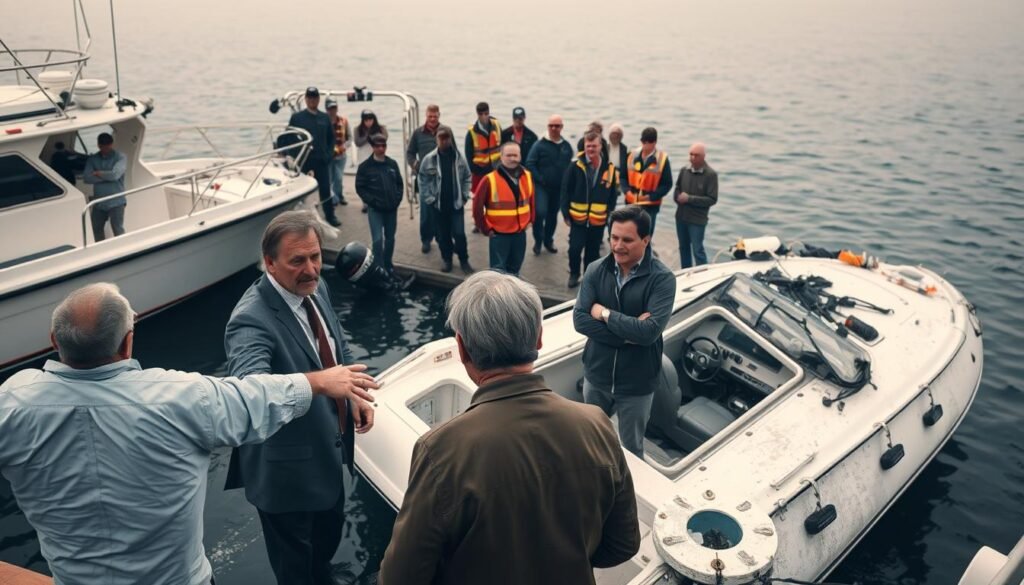
When Third Parties Share Fault: Companies, Manufacturers, And Government Entities
Rental companies can share fault for unseaworthy craft, missing equipment, or inadequate renter briefings. Manufacturers may face claims for defective engines, steering, or safety gear that cause failures.
Maintenance firms risk responsibility for negligent repairs or missed service bulletins. Government entities may be liable for unmarked hazards, poor lighting, or neglected markers that create unreasonable risks.
Fault is often shared. Wake incidents, defective parts, and operator mistakes can all contribute. Naming every potential party preserves recovery options and helps allocate fault accurately; see guidance on who’s at fault in a boating.
Liability Of Rental Companies And Outfitters
A rental firm’s failures in maintenance or briefing often create the conditions that turn a routine outing into an injury case. Providers cannot shift their duty to deliver a seaworthy vessel or required safety gear to a renter.

Duty To Provide Seaworthy Vessels And Required Safety Equipment
Companies must supply life jackets, signaling devices, and working systems. Missing or defective equipment that contributes to an accident can expose the rental company to claims.
Renter Screening, Instruction, And Navigational Rule Briefings
Thorough screening and clear briefings reduce foreseeable risks. If a renter lacks experience, the outfitter must offer practical instruction and highlight local rules.
Maintenance Failures, Unreported Defects, And Poor Recordkeeping
Skipped service bulletins, deferred repairs, or sloppy logs increase the chance of mechanical failure. Poor records make it hard for a company to rebut negligence claims.
Evidence To Prove Rental Company Negligence
Key proof includes rental agreements, pre‑departure checklists, maintenance logs, prior defect complaints, patrol reports, photos, and witness statements.
- Preserve the vessel for inspection before repairs change crucial evidence.
- GPS tracks, passenger statements, and video help establish timelines and causation.
| Evidence Type | What It Shows | Who Provides It | Use In Case |
|---|---|---|---|
| Maintenance Log | Repair history; missed service | Rental Company / Shop | Links mechanical failure to provider |
| Pre‑Departure Checklist | Missing or defective equipment noted | Staff / Renter | Shows breach of safety duties |
| Patrol/Coast Guard Report | Official sequence and conditions | Authorities | Supports causation and timeline |
| Photos / Video / GPS | Visual proof of failures and movements | Passengers / Devices | Corroborates witness accounts |
Manufacturers And Maintenance Providers: Product And Service Failures
Mechanical flaws and botched service work often explain why control is suddenly lost on the water. Product defects and negligent repairs can create predictable modes of failure. Those failures may cause collisions, fires, or sudden stoppages that lead to serious injuries.
Product Liability For Defective Hulls, Engines, Steering, And Safety Gear
Design, manufacturing, and warning defects can be actionable against a manufacturer, distributor, or seller. Defective engines, steering systems, or PFD hardware that fail under load often trigger product claims under maritime or state law.
Negligent Repairs, Improper Installations, And Missed Service Bulletins
Improper installations—misaligned linkages or substandard fuel lines—create foreseeable failure modes. Missed service bulletins and ignored recalls strengthen a claim against service providers or companies in the supply chain.
How To Prove A Defect Or Repair Failure Caused The Accident
Preserve failed components and capture failure data immediately. Independent inspections and expert opinions tie the mechanical evidence to causation. Maintenance logs, warranty records, and prior complaints form a cohesive case theory.
| Failure Pattern | Likely Cause | Key Evidence |
|---|---|---|
| Loss of Steering | Steering linkage defect or bad installation | Preserved linkage, service records, expert report |
| Engine Stall | Fuel line failure or defective engine part | Fuel system test, recall history, maintenance logs |
| PFD Buckle Failure | Manufacturing defect or counterfeit equipment | Failed part, purchase records, lab testing |
Coordinate experts to align testimony with manufacturer specs. Do not alter or discard parts; preserving evidence can make or break claims. For legal context on maritime deadlines and procedural steps, see this key legal considerations.
Legal Framework: Maritime Law, State Law, And Deadlines
Whether federal admiralty or state courts control a case often depends on where the incident occurred and the nature of the harm. That choice shapes the applicable law, venue, and the deadline for bringing personal injury claims.
Admiralty Jurisdiction Versus State Waters
Maritime law commonly governs events on navigable rivers, the Great Lakes, and oceans. State laws usually apply on smaller or private waters.
Statutes Of Limitations Under Federal Maritime And State Laws
Under federal maritime law, personal injury claims typically have a three‑year limit. State statutes vary; for example, Georgia often allows two years, while South Carolina generally allows three years.
Negligence Elements: Duty, Breach, Causation, And Damages
To prove negligence, a claimant must show duty, breach, causation, and damages. Violations of navigational rules or unsafe speed often demonstrate breach in a boating context.
Shared Fault Scenarios: Wakes, Hidden Hazards, And Reasonable Lookout
Fault can be divided when wakes or hidden hazards contribute. Hitting a submerged object is not proof of operator error if a reasonable lookout was kept and reliable charts were used.
| Issue | What It Affects | Practical Tip |
|---|---|---|
| Admiralty vs State | Venue, procedural rules | Evaluate location and vessel use early |
| Statute Of Limitations | Time To File Claims | Start counsel review within weeks |
| Shared Fault | Damage Apportionment | Preserve evidence on speed and wake |
| Negligence Elements | Burden Of Proof | Collect logs, witness statements, and charts |
Compensation, Insurance, And Building A Strong Case
Maximizing recovery depends on documenting care, notifying insurers, and naming all responsible parties. Quick action preserves rights and sets the claim on a firm path.
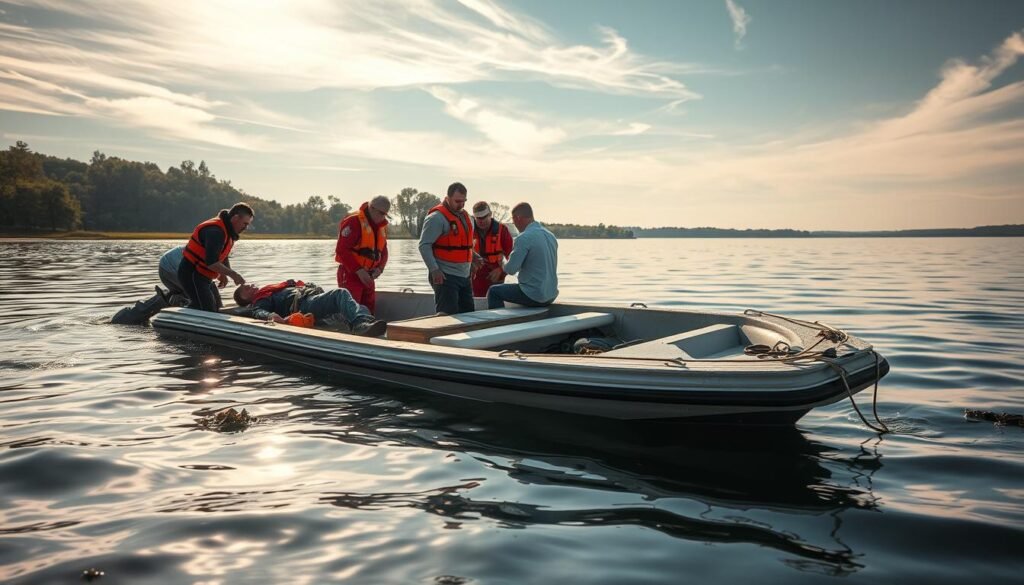
Recoverable Damages: Medical Care, Lost Income, Property, And Non‑Economic Losses
Recoverable compensation commonly covers emergency treatment, ongoing care, and future medical needs.
Claimants may also recover lost wages, reduced earning capacity, and repair or replacement of damaged boats and equipment.
Non‑economic losses include pain and suffering and diminished quality of life.
Insurance Coverage Considerations And Pursuing Underinsured Parties
Many owners carry specialized marine policies with unique exclusions. When limits fall short, recovery may proceed against underinsured parties or additional defendants.
A boating accident lawyer coordinates records, reports, photos, and expert opinions to value damages and press multiple carriers.
| Damage Category | What To Preserve | Who Helps |
|---|---|---|
| Medical Costs | ER records, bills, treatment notes | Physicians, billing records |
| Lost Income | Pay stubs, employer letters, vocational eval | Vocational experts, employer |
| Property Damage | Photos, repair estimates, ownership proof | Surveyors, mechanics |
| Pain & Suffering | Consistent treatment notes, diaries | Medical experts, treating providers |
To protect rights, seek timely medical care, report the incident to authorities, document the scene, and consult counsel. For guidance on how to receive compensation and on dealing with insurers, follow the linked resources.
Conclusion
Separating operator error from mechanical or company failure requires timely evidence. Prompt reporting, photos, witness names, and preserved parts make it possible to tie a failure to the harmed person and show who breached safety duties.
Shared fault is common: operator mistakes, poor maintenance, or rental shortcomings can all play a role. Acting quickly protects rights, meets varying deadlines, and keeps recovery options open.
For clear next steps on preserving claims and meeting legal timelines, see guidance on what to do legally after a boating. A boating accident lawyer can turn evidence into a focused claim that reflects injuries, property loss, and the parties responsible.