
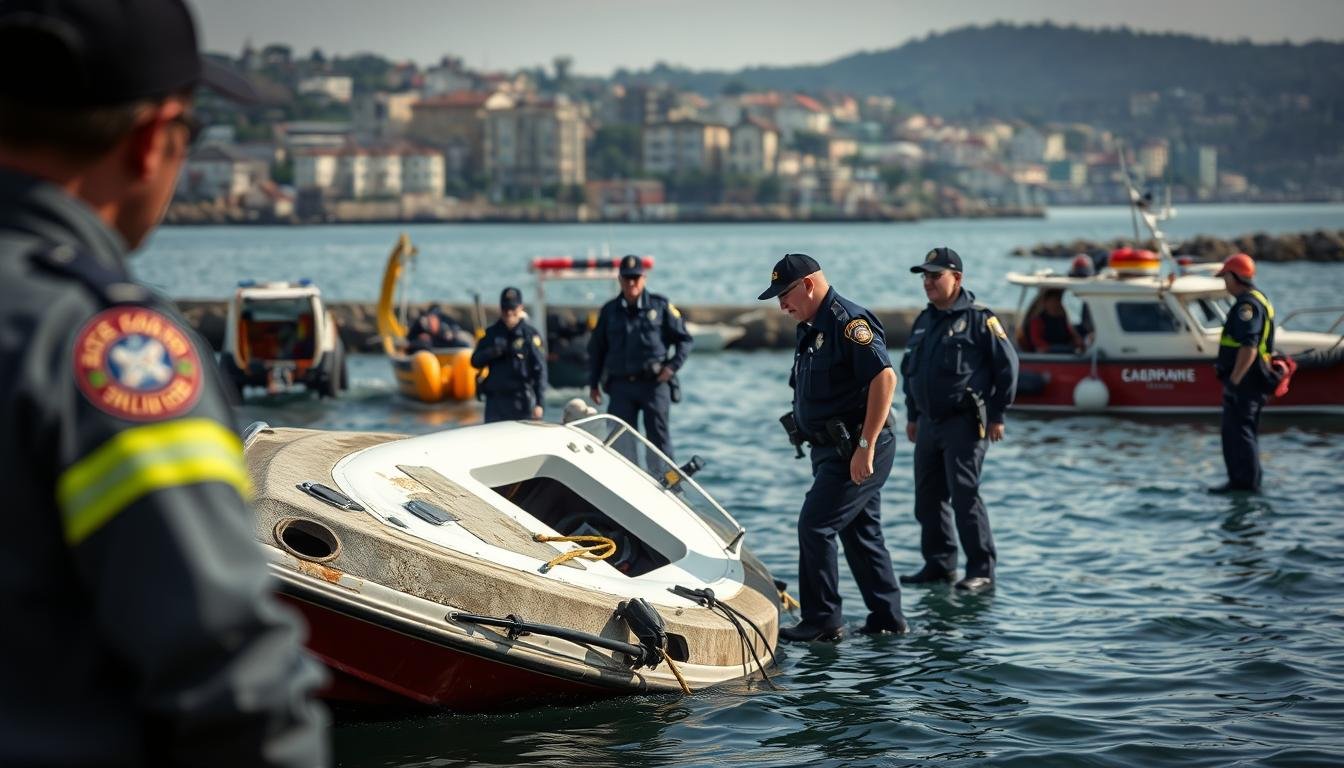
Who decides whether federal admiralty law or state law governs a waterway incident? Readers often assume the Coast Guard always leads, but the answer depends on where the event occurred and whether maritime law applies.
The guide explains how federal admiralty and maritime law once steered cases to federal court when waterways met legal tests. It also notes recent rulings that changed outcomes, such as the 11th Circuit finding a canal non-navigable when a state water-control structure blocked interstate travel.
This section clarifies who typically takes charge at the scene, how the situs and activity shape the controlling law, and why prompt action preserves claims and rights.
Key Takeaways
- Which court system applies hinges on navigability and maritime nexus tests.
- Federal admiralty law can give exclusive remedies, but not all waterways qualify.
- Local and state agencies may lead response when federal maritime reach is absent.
- Man-made obstructions and state controls can remove federal authority.
- Act quickly to notify the correct agency and protect evidence and claims.
Understanding Jurisdiction In Boating Accident Investigations
Determining which legal regime governs a waterway incident shapes every step of a resulting claim. This choice affects pleading rules, available remedies, and how courts treat liability and damages.
Why Jurisdiction Determines Which Laws Apply
Article III and 28 U.S.C. § 1333 give federal courts original admiralty power, and uniform maritime law can bind state tribunals. Courts must often decide this issue on their own to keep maritime rules consistent nationwide.
Admiralty/Maritime Law Vs. State Law Basics
The test for tort claims has two parts: a location element (navigable waters) and a nexus to traditional maritime activity. Leading cases like Sisson v. Ruby and Grubart frame that analysis.
- When both prongs apply, admiralty and maritime law govern; remedies and defenses differ from state law.
- If either prong fails, state laws and regulations usually control the claim and any personal injury suit.
- Early classification protects rights and avoids dismissal for lack of subject-matter jurisdiction.
| Issue | Admiralty/Maritime Law | State Law |
|---|---|---|
| Governing Standard | Uniform maritime rules (federal) | State statutes and common law |
| Typical Remedies | Vessel liens, limitation of liability | Compensatory damages, state-based defenses |
| Pleading & Procedure | Federal admiralty pleading required | State court practice and local regulations |
“Courts must ensure similar incidents receive similar treatment across forums.”
When Admiralty Law Applies: Navigable Waters And The Maritime Nexus
Courts apply a two-step test to decide whether admiralty governs. First they ask whether the location qualifies as navigable waters under longstanding precedent. Then they test whether the activity has a maritime nexus to traditional commerce.

The Location Test: What Counts As “Navigable Waters”
The Daniel Ball defined navigability as waters used or usable as highways for interstate commerce. The Montello reinforced that courts look to a waterway’s natural capability.
Later rulings, like Appalachian Power, allow evidence that human improvements make navigation feasible. Occasional obstructions or portages do not automatically defeat navigable status.
The Nexus Test: Connection To Traditional Maritime Activity
Grubart instructs courts to assess whether the general features of the incident could disrupt maritime commerce and whether the activity bears a substantial relationship to vessel movement or navigation.
Key Cases That Shape Jurisdiction
Decisions vary: Minix v. Fellers found a lake non-navigable, while Walton v. Channel Star treated a passenger fall via gangplank as maritime. The Eleventh Circuit later held Coral Park Canal non-navigable where a control structure blocked interstate travel.
Borderline Scenarios: Piers, Gangplanks, And Mixed Land‑Water Incidents
Close calls turn on where the cause arose — shipboard acts favor admiralty; shore-side faults often do not. Practitioners should document the precise site, vessel role, and historic commerce to support claims about navigable waters.
For a deeper legal framework on when maritime law applies, see when maritime law applies.
Coast Guard Authority Versus State And Local Powers
Federal and state authorities divide responsibilities on the water based on location, navigation uses, and constitutional grants of power. Article III and 28 U.S.C. § 1333 create federal admiralty reach, and those grants matter when waters serve interstate commerce.

Federal Jurisdiction On Navigable Waters And Coastal Zones
The Coast Guard holds primary federal authority on navigable waters and coastal zones for safety, casualty handling, and enforcement of maritime regulations. Federal admiralty and maritime law apply when the site and activity meet constitutional tests.
State Police Powers On Inland And Non-Navigable Waters
State and local officers keep police powers over inland lakes, rivers, and other non-navigable waters. They handle scene control, evidence collection, and enforcement of state laws that often mirror federal standards.
How Uniform Maritime Law Binds State Courts
Even when cases proceed in state forums, uniform maritime law can govern outcomes and shape liability. Courts apply these federal principles to keep navigation and vessel rules consistent across the states.
- Confirm whether the situs falls under federal admiralty reach early.
- Coordinate with both agencies where authority overlaps to avoid conflicting orders.
- Document boundaries, tidal influence, and interstate access to support which law applies.
How To Determine Who Leads The Investigation After An Incident
Who takes charge often depends on a short checklist: coordinates, commerce links, and what the vessel was doing. Start with precise location data and a quick assessment of activity to avoid delays that harm claims.

Step-By-Step: Assess Waterway Status, Location, And Activity
First, log GPS coordinates, shoreline markers, and chart references to fix the situs. That step shows whether waters meet admiralty or state standards.
Next, confirm whether the waterbody supports interstate commerce. This factor affects whether maritime law applies and which agency leads the response.
Then, note what the operator and vessel were doing at the time—navigation, mooring, boarding, or maintenance. Activity tied to traditional vessel operations favors federal reach.
Interstate Waters, Coastal Limits, And Federal Waters Triggers
- Map coastal limits: within three nautical miles (nine in parts of the Gulf), state authority remains important; past that, federal control often increases.
- For border rivers or lakes, determine the exact side where the case arose; if doubt exists, notify both states promptly.
- Identify the operator, vessel ownership, and any other vessels involved; collect time stamps and witness names to preserve filing rights.
If signs of admiralty appear, contact the Coast Guard while coordinating with state officers to preserve evidence and avoid conflicting reports.
Accident Reporting Requirements, Deadlines, And Evidence
Timely reporting can determine whether parties keep coverage and preserve rights after a waterway event. Federal rules require a report for death, an injury that needs treatment beyond first aid, disappearance suggesting death or injury, property damage at or above the typical $2,000 threshold, or total vessel loss.

What Makes An Event Reportable
Reportable items include death, serious injuries, disappearance, and property damage meeting the threshold. Fixed‑object strikes and boat collisions that push damages past the $2,000 mark also count.
Deadlines And Where To File
File within 48 hours for death, disappearance, or injury beyond first aid. File within 10 days for property‑damage‑only incidents or total loss.
Use USCG Form CG‑3865 where accepted or the state form. Submit to the state agency that handles such reports for the site of the occurrence.
Who Must File And State Variations
The operator is primarily responsible to file. If the operator is incapacitated, the owner files. For multi‑vessel events, each operator submits a separate report.
California uses State Parks Division of Boating and Waterways. New York uses the Office of Parks, Recreation & Historic Preservation. Florida routes to FWC, and Texas to Parks and Wildlife.
Documentation To Preserve
Preserve photos, witness contacts, medical records, repair estimates, GPS/chart data, weather logs, and maintenance records. These items support claims and strengthen requests for compensation.
Consequences Of Non‑Reporting
Failing to report can bring federal civil penalties up to $5,000, state fines or misdemeanors, and insurance denials or reduced settlements. Prompt reporting protects parties and evidence.
| Item | Deadline | Who Files |
|---|---|---|
| Death / Serious Injury / Disappearance | 48 Hours | Operator (or Owner if Incapacitated) |
| Property Damage ≥ $2,000 / Total Loss | 10 Days | Operator; separate reports in Multi‑Vessel Events |
| Forms & Filing Agencies | As Above | USCG CG‑3865 or State Form — CA, NY, FL, TX State Agencies |
“Document early: photos and witness names preserve facts that matter for coverage and claims.”
Conclusion
Careful documentation and early agency contact preserve options for liability and compensation. Courts apply admiralty only when both the location and nexus tests are met; non‑navigable waters or blocked interstate routes leave matters to state authority.
When facts are close, parties should notify the appropriate state agency and, where warranted, the Coast Guard to avoid gaps. Photograph damage, record witness names, and save navigation logs to support a later personal injury or vessel claim.
Consult an attorney early to weigh risks, align filings, and protect rights as cases develop. Identify the water, confirm navigable waters status, choose the right authority, and meet deadlines to reduce risk and improve outcomes.
FAQ
Who decides whether federal maritime law or state statutes apply after a vessel crash?
A court or investigating authority looks at where the incident happened and whether the activity involved a traditional maritime function. They apply the location test—whether the waterway is navigable—and the nexus test—whether the event has a close connection to maritime commerce or navigation. Those two factors guide whether federal admiralty law or state rules govern the claim.
How does the location test define “navigable waters” for legal purposes?
Navigable waters are waterways that are usable for interstate or foreign commerce, or that have been used historically for commercial navigation. This includes many coastal zones, rivers, and large lakes. If a waterbody supports trade or transportation between states or nations, it usually meets the location test.
What is the nexus test and why does it matter?
The nexus test examines whether the incident bears a substantial relationship to maritime activity, such as carrying people or goods, or operating a vessel for commerce. If the event connects to traditional maritime functions, federal courts may have admiralty jurisdiction, which affects remedies and procedures.
Which landmark cases shape maritime jurisdiction rulings?
Courts often rely on precedents like The Daniel Ball and The Montello for the navigability concept and Grubart for the combined location and nexus analysis. These rulings help define when federal maritime law applies versus state law remedies.
How are incidents on piers, gangways, or mixed land-water areas handled?
Borderline sites require careful analysis. If the harm arises from a vessel’s activity and the area connects to navigation, admiralty principles may apply. If the event is tied primarily to land-based negligence, state tort law will likely control. Each case depends on factual specifics.
What federal authority does the Coast Guard exercise after a serious marine incident?
The U.S. Coast Guard enforces federal safety regulations, investigates casualties that involve death or significant property damage on navigable waters, and issues reports. Their role focuses on regulatory compliance and safety, while criminal or civil enforcement may follow through other agencies or courts.
When do state police or sheriff departments take the lead on waterway incidents?
State and local agencies normally handle incidents on inland, non-navigable waters or where the matter is primarily a state criminal or civil issue. Local authorities also respond to emergencies, secure scenes, and perform initial evidence collection even when federal agencies later join.
How does uniform maritime law affect state court cases involving vessel claims?
State courts may apply federal maritime principles to ensure consistent treatment of maritime claims. Uniform rules influence liability standards, limitation of liability, and available remedies so that outcomes align across jurisdictions when maritime interests are present.
What steps determine who leads an official probe after an incident on the water?
Investigators assess the waterbody’s legal status, the nature of vessel activity, the location relative to state or federal boundaries, and whether interstate commerce was involved. That assessment, combined with statutory reporting requirements, determines which agency takes primary responsibility.
How do interstate rivers and coastal zones affect authority triggers?
Rivers that cross state lines and coastal areas adjacent to the high seas often fall under federal reach due to navigability and commerce. Boundaries set by statute and case law determine when federal jurisdiction applies versus state control.
When must an operator file an incident report and to whom?
Reporting thresholds vary, but serious events—those involving death, disappearance, certain injuries, or major property damage—typically require immediate notification to the Coast Guard and a written report within federal deadlines. Owners and operators must follow applicable federal and state filing rules.
What are common federal reporting deadlines for marine casualties?
Federal rules often require initial notification within 24 to 48 hours for deaths or serious injuries and a written report within ten days for other reportable incidents. Exact timelines depend on the statute and the nature of the event, so timely action is critical.
Who is legally responsible for filing when multiple vessels are involved?
Responsibility usually falls on the owner or operator of the vessel involved in the casualty. When multiple vessels participate, each owner must report their vessel’s role and any injuries or damage they suffered or caused, consistent with federal and state rules.
How do state reporting rules differ in places like California, New York, Florida, and Texas?
States set their own thresholds and forms for local agencies. Coastal states often mirror federal reporting for navigable waters while adding distinct administrative requirements for recreational craft, registration details, or local enforcement procedures. Operators must follow both state and federal obligations where applicable.
What evidence should parties preserve after a collision or injury on the water?
Preserve photographs, videos, navigation data, logbooks, maintenance and repair records, witness statements and contact information, medical reports, and any salvage or tow documentation. Early preservation prevents loss of critical proof for claims or regulatory reviews.
What happens if an owner or operator fails to report as required?
Failure to report can lead to civil penalties, administrative fines, suspension of licenses or registrations, and adverse consequences in insurance claims. Non-reporting can also undermine credibility and legal defenses in subsequent lawsuits.
When should an injured party consult an attorney experienced in maritime and personal injury matters?
An attorney should be contacted promptly if there are serious injuries, disputed fault, complex jurisdictional questions, or significant property loss. Early legal advice helps protect evidence, preserve claims, and navigate federal versus state remedies.
Can insurance cover claims that fall under federal admiralty law?
Yes. Marine and liability insurance often respond to claims governed by admiralty principles, but coverage depends on policy language and statutory defenses. Insurers and insureds must coordinate with counsel to determine coverage and limits under maritime rules.
How do remedies differ between federal maritime claims and state tort claims?
Federal maritime claims may permit specific remedies such as maintenance and cure, limitation of liability, and specialized damage rules. State tort claims follow local negligence standards and damages law. The governing framework affects available compensation and procedures.
Where can operators find authoritative guidance on federal reporting and safety standards?
The U.S. Coast Guard publishes reporting requirements, casualty investigation procedures, and navigation safety rules on its official website. State boating agencies and departments of natural resources provide local regulations, registration, and safety guidance.