
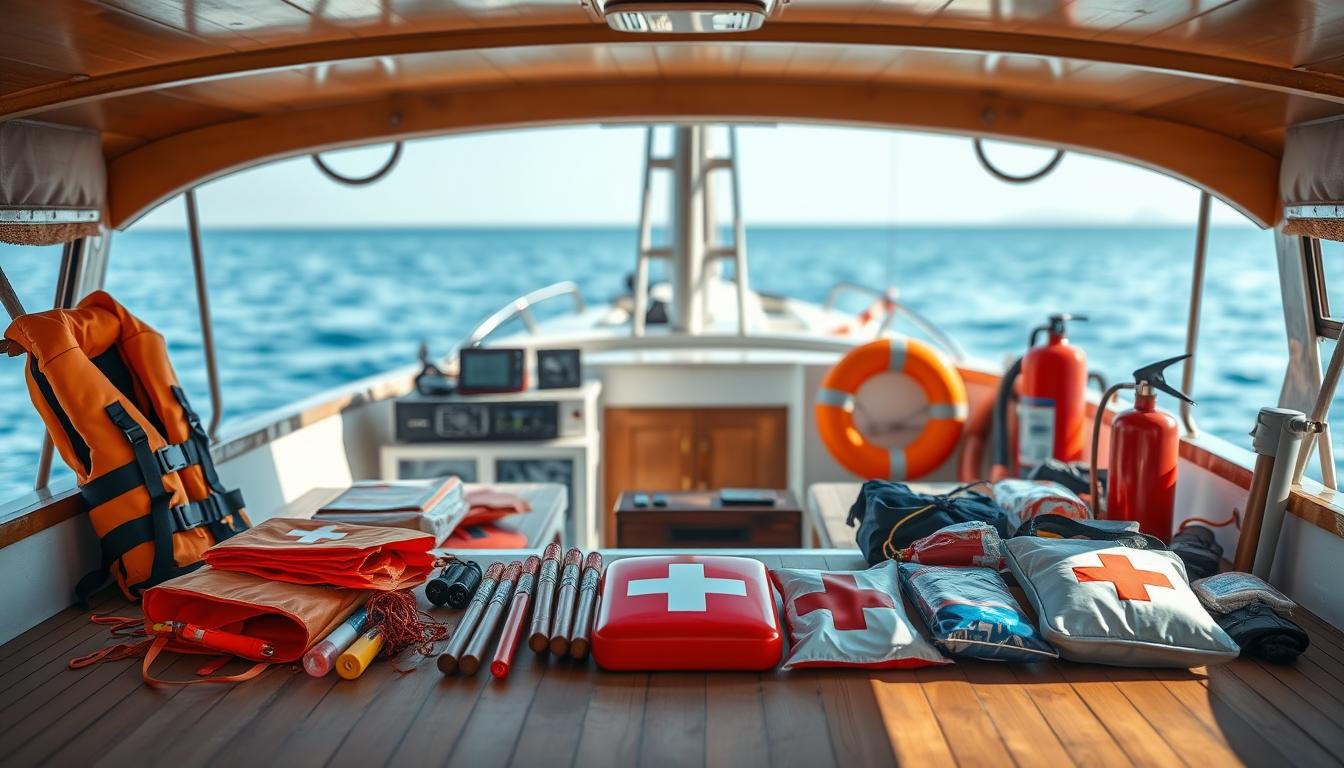
Nearly one in three recreational vessels inspected lack the minimum, USCG-required gear to operate legally. That gap puts lives at risk and leaves operators open to fines.
The guide begins with clear federal baselines that vary by length, night use, propulsion type, and even the body of water. Operators of vessels 16 feet and over must carry one wearable, USCG-approved PFD per person plus a Type IV throwable, plus visual distress signals, fire protection, sound devices, and working navigation lights.
It also explains key technical rules such as ventilation for gasoline boats, powered blowers for most enclosed craft built after July 31, 1981, and backfire flame arrestors for inboard engines.
Readers get concise, actionable information and a link to authoritative material to confirm specifics: required gear by the coast guard.
Key Takeaways
- Federal minimums change with vessel length, time of day, and propulsion.
- Vessels 16 feet+ need wearable PFDs per person and a Type IV throwable.
- Carry current flares, the right fire extinguishers, sound signals, and lights.
- Gasoline boats need proper ventilation and blowers; run blowers before starting.
- Follow coast guard guidance and local state rules to stay compliant.
Boat Safety Equipment Laws And Requirements: The Legal Basics
Every operator must meet U.S. Coast Guard minimums before leaving the dock. These national standards set core items that apply to all recreational craft, then scale by length, hours underway, and offshore exposure.
Understanding U.S. Coast Guard Rules And Minimum Equipment Standards
USCG rules require wearable PFDs sized to the user and kept readily accessible on board for every person. Once a vessel reaches 16 feet, a Type IV throwable must be immediately available.
How Boat Length, Night Operations, And Distance From Shore Change Requirements
Visual distress rules tighten for night use and for craft 16 feet and over, which must carry day/night approved signals and at least three unexpired pyrotechnics. Sound and light needs also increase with night operations and longer trips from shore.
State Variations, Enforcement, And Keeping Gear In Serviceable Condition
Fire extinguisher counts rise with size (B‑I/B‑II thresholds apply), ventilation rules depend on build dates, and inboard gasoline engines need flame arrestors meeting SAE J1928 or UL 1111. Many states add layers; authorities focus on accessibility and serviceable condition during inspections.
| Category | Threshold | Key Rule |
|---|---|---|
| PFDs | All sizes | USCG‑approved, worn or accessible |
| Throwable | 16 feet+ | Type IV immediately available |
| Visual Distress | Night / 16 feet+ | Day/night devices; 3 pyrotechnics |
| Sound Devices | <39.4 ft / 39.4–65.6 ft | Efficient horn; whistle + bell |
Boat Safety Equipment Laws and Requirements: Required Gear By Boat Size And Use
Minimum onboard gear changes with vessel length, day or night use, and how far a trip ventures from shore. This section summarizes what must be aboard by feet and type of use so operators can verify compliance quickly.

Personal Flotation Devices And Throwable Flotation Devices By Feet And Vessel Type
Recreational craft must carry USCG‑approved personal flotation devices sized to each user and kept ready for immediate use. Vessels 16 feet long and over also need a Type IV throwable within reach.
For families, include child sizes and instruct passengers how to don pfds quickly.
Visual Distress Signals For Daytime And Nighttime, Inshore And Offshore
All boats must carry approved night-use visual distress signals. Craft 16 feet+ must have at least three approved day/night devices.
Check each device’s expiration and condition before departure and store signals where they stay dry and accessible.
Fire Extinguishers: B-I/B-II Ratings, Quantity, And Placement By Boat Size
- Under 26 feet: often one B‑I extinguisher (subject to exemptions).
- 26–40 feet: two B‑I or one B‑II.
- 40–65 feet: three B‑I or one B‑I plus one B‑II; fixed systems may substitute.
Mount extinguishers near the galley, engine access, and helm for fast removal. Inspect gauges and tags regularly.
Sound-Producing Devices: Whistles, Horns, And Bells For Different Vessel Lengths
Under 39.4 feet an efficient sound producing device is required. From 39.4 to under 65.6 feet, carry both a whistle and a bell to meet signaling rules.
Navigation Lights And Running Lights For Night And Reduced Visibility
Working running lights—red/green sidelights and a white stern or all‑around light—are mandatory at night and in reduced visibility. Test bulbs and lenses during pre‑departure checks.
Label storage locations and review gear before every trip. For a concise checklist tailored to common vessel sizes, consult the official safety checklist.
Engine, Fuel, And Ventilation Systems Compliance
Proper ventilation and engine controls prevent fuel vapors from turning routine starts into emergencies.

Ventilation systems must have separate air inlets and outlets with ducts extending into the hull. Exhaust ducts belong in the lower third above bilge water. Ducts should run away from heat, be free of kinks, and be inspected for cracks or debris.
Ventilation Requirements: Ducting, Natural Vents, And Power Blowers For Gasoline Engines
Natural vents and cowls help but do not replace mechanical ventilation. For enclosed gasoline engines, power blowers evacuate fumes more reliably. The coast guard requires mechanical ventilation for many non-open gasoline boats built after July 31, 1981.
Operators must run blowers at least four minutes before starting and after fueling to clear fuel vapors.
Backfire Flame Arrestor Standards (SAE J1928/UL 1111) For Inboard Gasoline Engines
Every inboard gasoline engine needs a backfire flame arrestor meeting SAE J1928 or UL 1111. The arrestor must seal airtight to the carburetor, have intact grids, and be cleaned with soap and water to preserve porosity.
Lanyard Engine Cut-Off Switch And Preventing Runaway Boat Incidents
Use a lanyard cut-off and ignition‑protected wiring. Sniff the bilge, open hatches briefly, and keep a charged extinguisher near engine access. Tie these checks into pre-departure routines and confirm compliance with USCG minimums.
| System | Key Point | Action |
|---|---|---|
| Vent Ducting | Lower third exhaust | Inspect for kinks, debris, cracks |
| Power Blower | Instrument-panel control | Run 4+ minutes before start |
| Flame Arrestor | SAE J1928 / UL 1111 | Clean, seal airtight to carburetor |
State Variations, Texas Rules, And A Practical Safety Checklist
State rules change how federal minimums apply, so operators should check local mandates before each trip.

In Texas, every vessel must carry USCG‑approved life jackets sized for each person. Children under 13 on boats under 26 feet long must wear a life jacket unless inside a fully enclosed cabin.
Texas-Specific Requirements: Life Jackets, Visual Distress, Sound, Lights, And Towing Mirrors
Boats over 16 feet must also carry a Type IV throwable. Vessels in coastal water need approved visual distress signals for day and night to call for help when distress occurs.
An efficient sound device is required under 39.4 feet; larger boats must also carry a bell. Navigation lights are mandatory from sunset to sunrise and in limited visibility.
Ultimate Checklist: PFDs, Distress Signals, Extinguishers, Radio, First Aid, Anchor, Tools, And Spares
Keep at least one marine-rated B‑I extinguisher aboard smaller craft and scale up for larger vessels. Fit inboard gasoline engines with a backfire flame arrestor and test the lanyard engine cut-off on motorboats under 26 feet.
- State registration numbers displayed and paperwork onboard.
- PFDs for all, a Type IV throwable, visual distress signals, sound devices, lights checked.
- VHF radio, first aid kit, anchor, spare parts, fuel filters, fuses, and tools.
For a printable checklist and full state-specific information, consult this state boating checklist. state boating checklist
Conclusion
A final inspection and a clear plan turn required items into usable lifesavers on the water. Crews should keep one wearable personal flotation device per person and a Type IV throwable for vessels 16 feet and over. Verify at least three current visual distress signals, functional navigation lights for night use, and a ready sound device before departure.
Pay special attention to gasoline engine ventilation: run blowers four minutes before starting, confirm duct integrity, and secure a backfire flame arrestor marked SAE J1928 or UL 1111. Attach the engine cut-off lanyard while underway to stop the engine if the operator goes overboard.
Routine training, redundancy for night or offshore trips, and a written checklist make compliance continuous and practical. For a printable checklist and state-specific guidance, see this boat safety checklist.
FAQ
What are the basic U.S. Coast Guard minimum equipment standards for recreational vessels?
The U.S. Coast Guard requires that each vessel carry serviceable devices appropriate to its size and use. That includes personal flotation devices (PFDs) for every person on board, at least one throwable flotation device on boats over certain lengths, visual distress signals for day and night operations when required, an approved fire extinguisher if the craft has an inboard engine or enclosed compartments, a sound-producing device such as a whistle or horn, and navigation lights for night or reduced visibility. All gear must be in good working condition and readily accessible.
How does vessel length affect required flotation and throwable devices?
Required flotation varies by vessel length and type. Small open boats must have an appropriate number of wearable PFDs sized for adults and children. Many vessels 16 feet and longer must also carry a throwable cushion or ring buoy readily available. Personal watercraft and canoes/kayaks have specific PFD rules. The owner should consult federal and state charts to match device counts and types to the boat’s length and passenger capacity.
What visual distress signals are mandated for day and night use?
Visual distress signals differ by where and when the vessel operates. For coastal and offshore trips, night-capable pyrotechnic devices (flares) and non-pyrotechnic options like approved electric distress lights are often required. In inland waters, day signals such as orange flags or electronic devices may suffice. All signals must meet Coast Guard approval and be within their stated service life.
When does a vessel need a fire extinguisher and what ratings matter?
Any vessel with an engine compartment, enclosed cabin, or permanently installed fuel system typically must carry at least one portable fire extinguisher. Extinguishers are rated B-I, B-II, etc.; the required number and rating depend on length and whether the craft is a powerboat or sailboat with an inboard engine. Units must be Coast Guard–approved, mounted for quick access, and regularly inspected for pressure and corrosion.
What sound-producing devices are required for different vessel lengths?
Small craft must carry a whistle or horn capable of making the standard navigation signals. Vessels 12 meters (about 39 feet) and longer may need a bell in addition to a whistle or horn. The device should be audible at prescribed ranges and used to signal intentions, warnings, or during restricted visibility.
What are the navigation light requirements for night and low-visibility travel?
Any vessel operating between sunset and sunrise or in restricted visibility must display appropriate running lights: red and green sidelights, a white stern light, and an all-round white light for small craft at anchor. Larger vessels have specific masthead and towing light placements. Lights must be visible at required ranges and properly mounted to avoid obstruction.
What ventilation is required for gasoline engines to prevent fuel vapor buildup?
Gasoline-powered inboard and closed-compartment outboard engines need ventilation systems that remove explosive fumes. This includes natural vents, ducting, and, when required, power ventilation (blowers) that run before engine start. Newer standards also call for bilge and compartment ventilation to meet fire and explosion prevention requirements.
Are backfire flame arrestors required for inboard gasoline engines?
Yes, many regulations require backfire flame arrestors that meet SAE J1928 or UL 1111 standards on carbureted inboard gasoline engines. These devices prevent flames from the engine from igniting vapors in the intake system. Owners should verify compliance with federal and state rules and replace units that show corrosion or damage.
When is an engine cut-off lanyard required and how does it prevent runaway incidents?
Many states and boating safety programs require a lanyard-style engine cut-off switch on vessels under a specified length or those used for towing. When attached to the operator, the lanyard stops the engine if the operator falls overboard, reducing runaway-boat risks. Manufacturers also offer electronic kill-switch systems with similar functions for added safety.
How do state rules vary, and what should boaters in Texas know specifically?
States set additional requirements beyond federal minimums. Texas mandates wearable life jackets for children under certain ages, specific visual distress devices for coastal waters, functioning sound signals, and correct navigation lights. Some Texas waterways also require towing mirrors on personal watercraft used for towing. Operators should check the Texas Parks and Wildlife Department for current statutes and local ordinances.
What belongs on a practical pre-departure checklist for a day on the water?
A concise checklist includes properly sized PFDs for each person, a readily available throwable device, required visual distress signals and flares within expiration, one or more Coast Guard–approved fire extinguishers, a working horn or whistle, navigation lights, a VHF radio or personal locator beacon, basic first aid kit, spare lines and tools, an anchor with rode, fuel and oil levels checked, and an engine cut-off lanyard or kill switch in place. Inspect all items for serviceability before leaving the dock.
How often should PFDs, flares, and extinguishers be inspected or replaced?
PFDs should be checked for tears, broken straps, and flotation integrity at least seasonally. Flares carry expiration dates and must be replaced after that date or if they show damage. Fire extinguishers require an annual gauge check and periodic servicing per manufacturer recommendations; replace extinguishers that are corroded, damaged, or have failed pressure tests.
Are non-pyrotechnic visual distress signals acceptable in place of flares?
Approved non-pyrotechnic devices, such as electric distress lights and signal mirrors, are acceptable in many situations and are preferred in some protected inland waters and by some operators seeking reusable options. However, coastal and offshore regulations often still require pyrotechnic flares for certain classes of vessels and nighttime emergencies. Verify the allowed devices for the intended waters.
What penalties can result from failing to carry required gear or carrying unserviceable items?
Enforcement varies by state and by the U.S. Coast Guard, but penalties can include fines, warnings, detention of the vessel until deficiencies are corrected, and increased liability after an accident. In criminal or negligent cases, consequences may escalate to more severe legal action. Maintaining required, serviceable gear reduces risks and legal exposure.
Where can boat operators find authoritative, up-to-date checklists and regulations?
Official resources include the U.S. Coast Guard Office of Boating Safety, the National Oceanic and Atmospheric Administration (NOAA) for navigation rules, and state boating agencies such as Texas Parks and Wildlife Department. Manufacturers’ manuals and Coast Guard–approved equipment lists help match gear to vessel type. Local marinas and recognized organizations like BoatUS and the U.S. Power Squadrons also provide practical checklists and training.
Disclaimer
This article is for informational purposes only and does not constitute legal advice. Always consult a qualified attorney or relevant authority for the most up-to-date information about boating safety laws.
Related Articles
- Boat Safety Equipment Laws and Requirements
- Reporting a Boat Accident: When and How It’s Required by Law
- Comparative Fault in Boating Accidents: How It Impacts Your Claim
- Mandatory Boating Insurance: What Does the Law Require?
- How Maritime Law Affects Boating Accidents on Open Waters
More from This Category
- The Statute of Limitations for Filing a Boat Accident Claim
- Penalties for Operating a Boat Under the Influence (BUI)
- Liability in Boat Accidents: Who’s at Fault?
- What to Do Legally After a Boat Accident
- The Role of the Coast Guard in Boat Accident Investigations
Additional Resources
- Boat Operator Responsibilities and Legal Obligations
- Understanding Federal vs. State Boat Accident Laws