
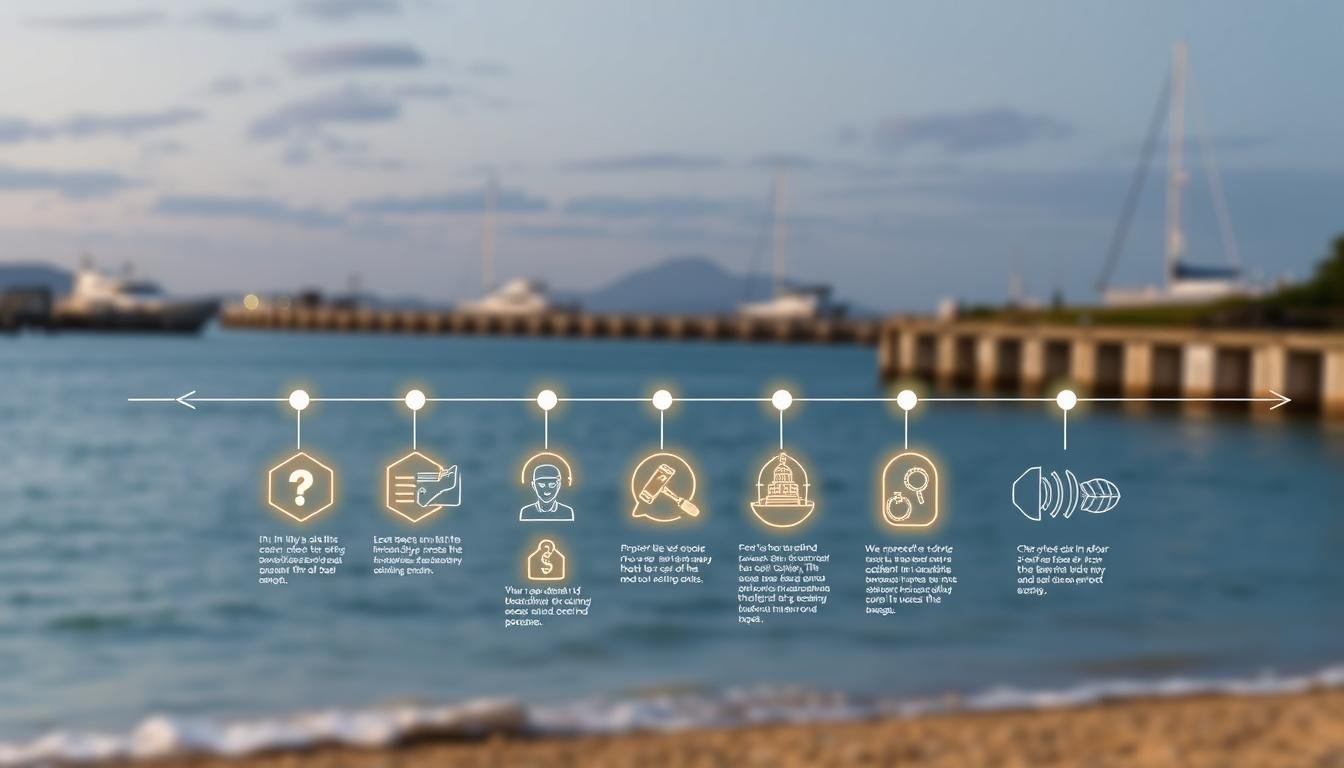
How long will the process really take after a waterway incident, and what steps speed a fair result?
The boat accident injury claim timeline gives readers a clear view of how a personal injury case moves from the first report to final settlement. It often takes one to two years to resolve most matters, while complex cases can stretch longer.
Early documentation — photos, witness contacts, and medical records — and timely reporting improve outcomes. An experienced lawyer and a coordinated team can help negotiate with the insurance company and keep the process on track.
For an overview of typical durations and phases, see this guide on how long settlements often take: how long a jet ski or boat claim takes to.
Key Takeaways
- Expect one to two years for many cases, with complex matters taking longer.
- Document everything early — complete records often speed resolution by up to 40%.
- Legal representation matters: qualified counsel increases success rates.
- Insurance responses and fault disputes commonly extend the process.
- Deadlines vary: some government-related matters require notice much sooner.
Boat Accident Injury Claim Timeline Overview And What Readers Will Learn
Understanding how a case advances — from medical care and evidence collection to insurer review and settlement — helps set realistic expectations.
This overview maps the journey from first report to final settlement. It explains the common phases: reporting, medical evaluation, evidence gathering, a demand package, insurer review, negotiation, and possible litigation.
Typical investigations run six months to a year before a strong demand is submitted. When liability and damages are clear, many cases resolve within one to two years.
Evidence matters: photos, witness statements, and medical proof increase value and cut delays with the insurance company. Insurers often start with low offers. A skilled lawyer counters with documented losses and expert valuations.
“Early notice and complete records are the single biggest factors that shorten the process.”
- Readers will learn who handles which tasks and what they can do to help.
- The section previews later chapters that dissect each stage and the legal standards that apply.
Immediate Steps After A Boating Accident To Protect Your Timeline
Prompt steps taken on scene and in the days that follow set the pace for a successful case outcome. Acting fast preserves facts, prevents disputes over the date, and helps the insurance company start its investigation.

Accident Reporting Deadlines: 48 Hours And 10 Days Requirements
In California, certain incidents must be reported within 48 hours when someone needs medical treatment beyond first aid or when a fatality occurs. Other qualifying events require a report within 10 days.
Missing these windows can complicate liability and reduce options, especially with government-related procedures that may have even shorter notice rules.
Essential Evidence: Photos, Witnesses, And Medical Records
Collect clear photos of damage, weather, and GPS tracks immediately. Get names and contact details for witnesses and keep a dated log of records and bills.
- Photos and GPS: anchor the fact pattern against later disputes.
- Witness statements: reduce reliance on conflicting recollections.
- Records: contemporaneous medical and expense logs help value a settlement.
Medical Treatment And MMI: When To Start The Claim Clock
Seek prompt treatment and follow care plans. Contemporaneous notes and diagnoses support causation and counter insurer arguments that injuries are unrelated.
Understanding MMI (maximum medical improvement) matters: a comprehensive demand usually waits until treatment stabilizes so future care is captured accurately.
Note: For guidance on early insurer interactions, see this resource on handling insurance claims.
Boat Accident Injury Claim Timeline
A clear plan at the outset helps move a case from intake to resolution without needless delay.
Beginning The Claim: Consultation, Notice, And Early Strategy
The process typically starts with a consultation and prompt notice to the insurer. Early notice preserves coverage and begins the official record. Counsel sets short-term goals and documents treatment and witness contacts.
Investigation And Evidence Gathering: Six Months To A Year
During this period, an attorney collects medical records, police or Coast Guard reports, and expert analyses. This phase commonly spans six months to a year. Clear, dated records speed evaluation and strengthen valuation.
Demand Letter And Insurance Review
Once evidence is assembled, counsel sends a demand letter that outlines liability, damages, and the legal basis for compensation. Insurance companies often respond with a low offer and request more proof.
Settlement Negotiations: Typical One To Two Years Window
Negotiations usually resolve most matters within one to two years. Offers rise with better documentation and expert opinions. Realistic valuation and steady communication compress the process.
Filing Suit If Needed: Pretrial Opportunities To Settle
If talks stall, filing suit unlocks discovery tools that often prompt settlement. Many cases settle before trial as costs and pressure mount.
Trial And Resolution: What To Expect If Your Case Goes To Court
Trial is a contingency. Preparation includes depositions, expert planning, and motion practice. A well-prepared file gives the best chance at a favorable verdict.
Practical Tip: Watch filing deadlines and consider the statute context when planning next steps. Consult resources on filing deadlines and on average settlement timelines for further context.

| Stage | Typical Duration | Key Actions |
|---|---|---|
| Consultation & Notice | Days to Weeks | Preserve coverage; document treatment; initial strategy |
| Investigation | 6–12 Months | Collect records, witness statements, expert reports |
| Negotiation & Settlement | 6 Months–2 Years | Demand letter, counteroffers, expert valuation |
| Litigation/Trial | 1+ Years if needed | Discovery, motions, trial preparation |
Deadlines, Jurisdiction, And Which Laws Control Your Case
Quick jurisdiction analysis shapes strategy and avoids procedural traps. Which rules apply depends on where the event occurred and who owns the vessel. State courts commonly apply local statutes, while navigable waters may trigger federal maritime law.

State Statutes Of Limitations: Two Years For Injury, Three For Property
Most states give two years for personal injury and three years for property claims. California follows this pattern and also imposes a six-month notice requirement for claims against government entities.
Federal Maritime Rules On Navigable Waters
When federal admiralty law governs, venue, damages, and procedural limits can differ. Maritime rules may shorten or change filing windows and affect how fault and damages are measured.
Government Vessels: Short Notice Windows And Special Procedures
Claims involving government vessels often need prompt notice. Some actions require notice in as little as 90 days before suit is permitted. Missing these steps risks dismissal regardless of damages.
Discovery Rule For Delayed Injuries
The discovery rule can pause the limitations clock until an injury is reasonably discoverable. This protection matters when symptoms appear later and preserves the right to seek recovery.
Minors And Incapacitated Individuals: Tolling Considerations
Statutes may toll for minors or those lacking capacity, extending filing dates until legal competency returns. Coordination with an attorney ensures deadlines are calendared and jurisdictional issues are resolved.
For more on filing windows and state procedures, review statute limitations for boating injury claims.
Key Factors That Speed Up Or Slow Down Settlement
Several factors determine whether a case moves quickly to settlement or stalls for months.
Severity Of Injuries, Future Care, And Policy Limits
The seriousness of treatment needs and the predictability of recovery strongly affect how long negotiations take.
When future care is uncertain, valuation waits until prognosis stabilizes. Policy limits also shape outcomes: low limits can cap compensation and speed resolution, while layered coverage often adds back-and-forth among insurers.
Disputes over fault, multiple responsible parties, or complex maritime rules require deeper evidence, such as reconstructions and expert reports.
Insurers commonly start with low offers and request extended document sets. A seasoned lawyer pushes back, organizes evidence, and presses for timely responses.
- Clear evidence and complete treatment records speed resolution.
- Multiple companies or complicated liability fragments negotiations.
- Filing suit can prompt more realistic offers when talks stall.
For practical guidance on negotiating with an insurance company, see dealing with insurance companies.
Working With Insurance Companies, Offers, And Litigation Pathways
Negotiating with insurers often defines how quickly a case reaches resolution and how much compensation a person receives.

Response Timing, Lowball Offers, And Bad Faith Risks
Insurers frequently answer slowly and with low offers. That is normal. A lawyer organizes medical, wage, and loss documentation to push value higher.
Track every call and promise. Confirm response dates in writing and set diary follow-ups. Clear records protect rights if patterns of unreasonable delay or denials emerge.
- Coordinate communications so one person handles insurer steps and records responses.
- Expect initial low offers; counter with dated bills, reports, and expert notes.
- Filing suit can prompt better offers because discovery and trial costs increase pressure.
“Document, date, and demand—those three steps turn weak offers into serious negotiations.”
| Action | Why It Matters | When To Escalate |
|---|---|---|
| Confirm Offers in Writing | Creates enforceable record | When verbal promises change |
| Maintain Call Log | Shows unreasonable delays | If responses miss promised dates |
| Consult An Attorney | Improves valuation and strategy | Before accepting any early settlement |
How To Strengthen Your Claim Today For Faster Compensation
Organizing records and acting promptly improves outcomes and shortens the path to a settlement. Clear files make it easier to show damages, treatment, and loss of income.

Organize Records, Track Costs, And Preserve Evidence
Start today by gathering medical bills, treatment notes, repair estimates, wage statements, and a ledger of out-of-pocket costs. Save photos, videos, and correspondence in a secure digital folder for quick access.
Preserve physical evidence where possible—retain damaged components, navigation logs, and weather data. These items support liability and reduce disputes from insurers.
Choose The Right Attorney And Act Before Deadlines
Engage counsel early. A coordinated team values damages, manages insurer requests, and moves the case forward. In California, note the two years personal injury window and the three-year property rule; government notices may require action within six months.
Request a consultation to map key days and align the demand with treatment milestones. For immediate legal steps, review practical guidance on what to do immediately and on legal next steps.
| Action | Immediate Benefit | When To Do It |
|---|---|---|
| Organize Records | Speeds review; supports higher settlement value | Start today |
| Preserve Evidence | Strengthens liability arguments | Within days of the event |
| Engage Attorney | Improves strategy and insurer response | Early in treatment or before filing |
| Track Deadlines | Protects the right to compensation | Immediately; update calendar |
Conclusion
Understanding the expected path from notice to settlement lets people plan and act with purpose. Act early, preserve records, and follow medical advice to strengthen a personal injury case.
The typical settlement window is often one to two years when evidence is clear and treatment stabilizes. State limitations and maritime laws can shorten filing windows, so timeliness matters.
Anticipate insurer tactics and be ready to proceed toward trial if offers are inadequate. For a concise step-by-step on preparing paperwork and timing, review how to file a boating injury.
Disciplined follow-through, organized records, and early legal guidance give the best chance of a fair settlement without sacrificing long‑term recovery.
FAQ
How long does it usually take from filing to settlement for a boating injury case?
Timelines vary widely. Most matters resolve within one to two years when facts are clear and medical recovery is established. Complex cases with multiple parties, disputed liability, or significant future care needs can take longer and sometimes require litigation that extends the process by months or years.
What immediate actions should a person take to protect their legal rights after a water collision?
The injured party should report the incident to local authorities and the U.S. Coast Guard if required, seek prompt medical care, document injuries and property damage with photos, collect witness contact details, and notify their insurance company. Early consultation with an attorney helps preserve evidence and ensures notice deadlines are met.
Are there quick reporting deadlines after a maritime incident?
Yes. Many state and carrier rules require notification within short windows—sometimes 48 hours for insurer reporting and 10 days for certain vessel operators. Federal rules may impose separate reporting duties for incidents on navigable waters. Missing these can complicate recovery.
When should medical treatment reach maximum medical improvement before valuing a case?
Insurers and counsel typically wait until the injured person reaches maximum medical improvement (MMI) or a stable prognosis to assess future care needs and calculate damages. That often occurs weeks to months after injury, depending on severity and treatments required.
How long does investigation and evidence gathering usually take?
Initial investigations commonly take several months. Gathering medical records, witness statements, boat records, maintenance logs, and expert opinions often spans six months to a year, especially when forensic or maritime experts are needed.
What happens at the demand letter and insurance review stage?
Counsel prepares a demand package outlining liability, damages, and medical expenses. The insurer reviews it and may request records, surveillance, or independent medical exams. This stage can lead to negotiations or a denial that prompts further action.
How long do settlement negotiations normally continue before filing suit?
Negotiations typically continue for months. If meaningful offers don’t appear and statute deadlines approach, counsel will often file suit to preserve claims while continuing settlement talks. Filing can occur within the one- to two-year negotiation window depending on case dynamics.
What should be expected if the case goes to court?
Litigation introduces formal discovery, depositions, expert reports, motion practice, and potential trial scheduling. Courts set timelines that can add months to years. Many cases still settle during pretrial stages, but preparing for trial requires time and resources.
What statute of limitations usually applies to personal harm on the water?
State law often sets a two-year limit for personal injury and a three-year limit for property damage, but maritime law or federal statutes can alter these periods on navigable waters. Special notice rules may apply for government or chartered vessels.
How do federal maritime rules affect deadlines and procedures?
Federal maritime law governs operations on navigable waters and can impose different standards for liability, limitation of liability, and notice requirements. It also influences choice of law and venue, so maritime counsel should review applicable statutes early.
Are there special rules for incidents involving government or public-coast guard vessels?
Yes. Claims against federal or state entities often require short administrative notice periods and specific filing procedures. Failing to follow those rules can bar recovery, so immediate legal review is critical when a government vessel is involved.
What is the discovery rule and when does it apply?
The discovery rule delays the statute of limitations until the injured person knows, or reasonably should know, of the harm and its cause. It applies when injuries manifest later, but proving delayed discovery requires careful medical and legal documentation.
How are minors and incapacitated claimants treated regarding deadlines?
Many jurisdictions toll statutes of limitations for minors or those legally incapacitated, extending filing deadlines until a guardian can act or the person reaches majority. Guardians must still act within any special notice windows, so counsel should be consulted promptly.
What factors most often speed up or slow down resolution?
Faster resolution follows clear liability, limited injuries, strong evidence, and sufficient insurance. Delays arise from disputed fault, multiple defendants, catastrophic injuries requiring long-term care estimates, and insurer tactics like repeated requests for records.
How do insurers typically handle response timing and low settlement offers?
Insurers often respond within set policy periods but may issue low initial offers to test resolution appetite. Counsel negotiates higher settlements by organizing medical proof, cost projections, and expert support. Persistent lowballing can lead to bad-faith claims in some jurisdictions.
What should claimants do now to strengthen their case for faster compensation?
Claimants should organize medical records, keep a detailed ledger of expenses and lost wages, preserve photographs and witness contacts, and avoid posting details on social media. Retaining experienced maritime or personal injury counsel early helps meet deadlines and present a focused demand.
When is it time to hire an attorney?
A person should consult counsel as soon as possible—ideally before giving recorded statements to insurers or signing releases. An attorney can handle notice obligations, evidence preservation, settlement negotiations, and litigation if necessary.
Disclaimer: The content of this article is for informational purposes only and does not constitute legal advice. The information provided is based on general research and is not intended to be a substitute for professional legal advice or consultation with a qualified attorney. Always consult with a lawyer regarding your specific legal situation.